An Elk Island scenic drive can be planned as a short outing with a few deliberate stops. This guide explains how to choose a route, leave room for wildlife and adjust a cold-weather visit.
Checked November 2, 2026. Review current park notices before travelling. Several trails and Administration Road are listed as closed; the route below is a flexible planning outline, not a statement that every road or stop is open.
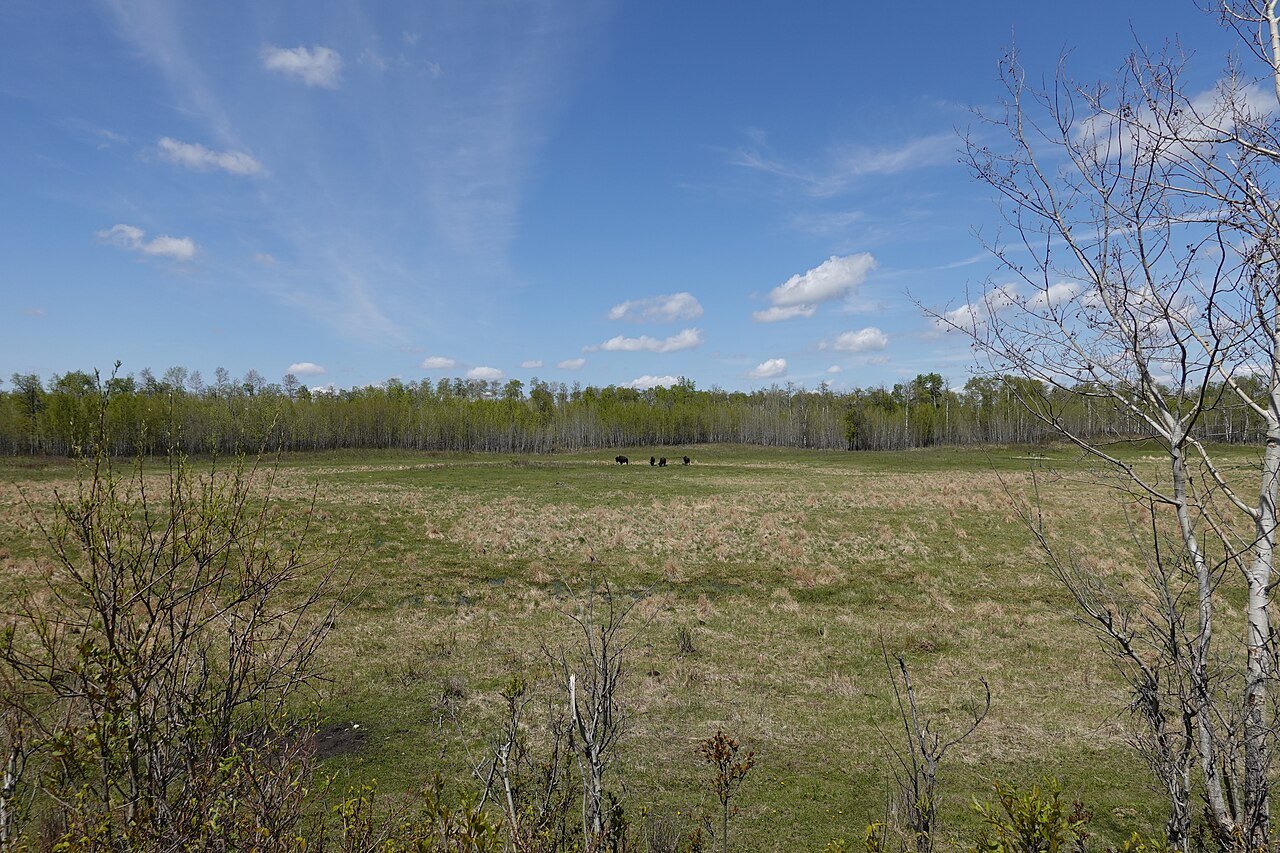
Photo: Bison in Elk Island National Park 05 by Khoshhat / Wikimedia Commons, CC0. Resized archival photograph from May 2024; not current conditions.
Elk Island scenic drive: a flexible route
For an Elk Island scenic drive, plan the day around a comfortable return rather than a wildlife checklist. Pick a main outing, allow time for stops and leave room to turn back if conditions change. A drive can be worthwhile without a long trail or a guaranteed bison sighting.
Write down the point where you will reassess the outing. For example, after reaching your first permitted viewpoint, decide whether the weather, remaining daylight and your energy support another stop. Keeping that decision explicit helps prevent a short visit from becoming an unplanned evening drive.
Access and entry checks before your Elk Island scenic drive
Start with the official park bulletins. At the November 2 check, Parks Canada lists Hayburger, Simmons, Shirley Lake and Tawayik Lake trails as closed. It also lists an Administration Road closure. Do not use those trails or treat the closed road as a scenic detour.
Choose permitted alternatives using the current notices and signs on site. For example, a general scenic-driving page can describe a lake viewpoint while a later bulletin closes its trail. The newer restriction matters to your itinerary.
Budget for park admission separately from fuel and food. Parks Canada’s current fee table lists daily adult admission at $10 and family/group admission at $19.50, for up to seven people arriving in one vehicle. Youth aged 17 and under have free admission. Check the current fee or applicable pass for your party before travelling.
Understand the park roads
Parks Canada identifies Elk Island Parkway as the main north–south road through the park, about 20 kilometres long. Its scenic-driving guidance also identifies Bison Loop Road as a place where herds may gather. That is context for choosing a route, not a guarantee of road access or animal sightings.
Check current park notices before setting out and obey road closures on arrival. Save a map before leaving home. Avoid using the name of the park as the only destination in your navigation: choose the actual entrance or permitted stop that fits the journey.
Use permitted stops for scenery
Choose a small number of stops rather than treating every potential viewpoint as an obligation. Parks Canada recommends road pull-offs, trailhead parking and signed viewpoints for stopping. Its general scenic-driving page mentions Astotin and Tawayik lakes, but the Tawayik Lake trail is currently listed as closed. Do not plan that trail as a stop while the restriction remains in effect.
Before leaving a parked car, decide whether the outing is a short look or a walk needing more equipment. Keep water, warm layers and appropriate footwear available. A lakeside view does not require going onto the lake; make the shoreline the destination and avoid using ice as a shortcut.
Let wildlife decide the timing
Bison are wild and unpredictable. Parks Canada’s bison advice tells drivers to slow down, avoid honking or aggressive driving, and stay in the vehicle when watching bison. Stop only where it is safe to do so, watch briefly and move on when the road is clear.
The 2026 roadside viewing restriction prohibits being within 100 metres of bison except while completely inside a legally positioned motor vehicle. It also prohibits interfering with their movement or creating a hazard. Do not build the day around approaching an animal or getting a particular photograph. Let passengers handle pictures so the driver can concentrate on the road. If an animal is occupying the route, waiting may be the only sensible next step. Leave enough flexibility that the delay does not become pressure to hurry.
Prepare for cold-weather conditions
Parks Canada’s winter guidance recommends checking the forecast and Alberta 511 before travelling. Its winter guidance says there is no fuel station in the park and that Parks Canada does not provide towing. Carry suitable supplies and start with enough fuel rather than treating the park drive as an urban errand.
Keep your first cold-weather visit simple. Choose daylight for the main drive, carry extra warm clothing, and allow yourself to shorten the outing. Do not assume that a clear forecast means every road or walking surface will be easy. Check the actual conditions and adapt the plan.
Make the return part of the itinerary
Set a return decision time before starting. Include the final park exit, the journey home and any necessary rest stop. A sunset viewpoint can change the timing of the whole trip, so choose it deliberately rather than adding it at the end of a tiring day.
If this is one outing in a longer Alberta trip, leave a quiet evening afterwards. Save the park information and contact details offline, and tell someone your plan. A modest drive with time to pause can be more useful than trying to combine every possible road and trail in one visit.
Elk Island scenic drive FAQ
Will I definitely see bison?
No. Wildlife sightings are unpredictable. Make the scenery and a comfortable outing the main plan, and treat a safe sighting as a bonus.
Can this be a short visit?
Yes. Choose a small number of permitted stops and reassess the conditions before adding another. Verify current access first.
Should I plan a walk as well?
Only if the trail conditions, daylight and your equipment suit it. A drive and a short viewpoint stop can be a complete outing.
Official resources
For weather preparation, see our Canada weather tool. For a different Alberta outing, compare our Calgary to Drumheller guide.