Visiting Québec City without a car starts with three decisions: choose a useful base, group your walks by area and plan transit for the journeys that would otherwise use too much energy. This guide helps you arrange arrivals, sightseeing and returns without assuming that every short-looking route is an easy walk.
Research-based planning guide. Official transport information checked October 23, 2026. Confirm current services, fares and conditions before travelling.
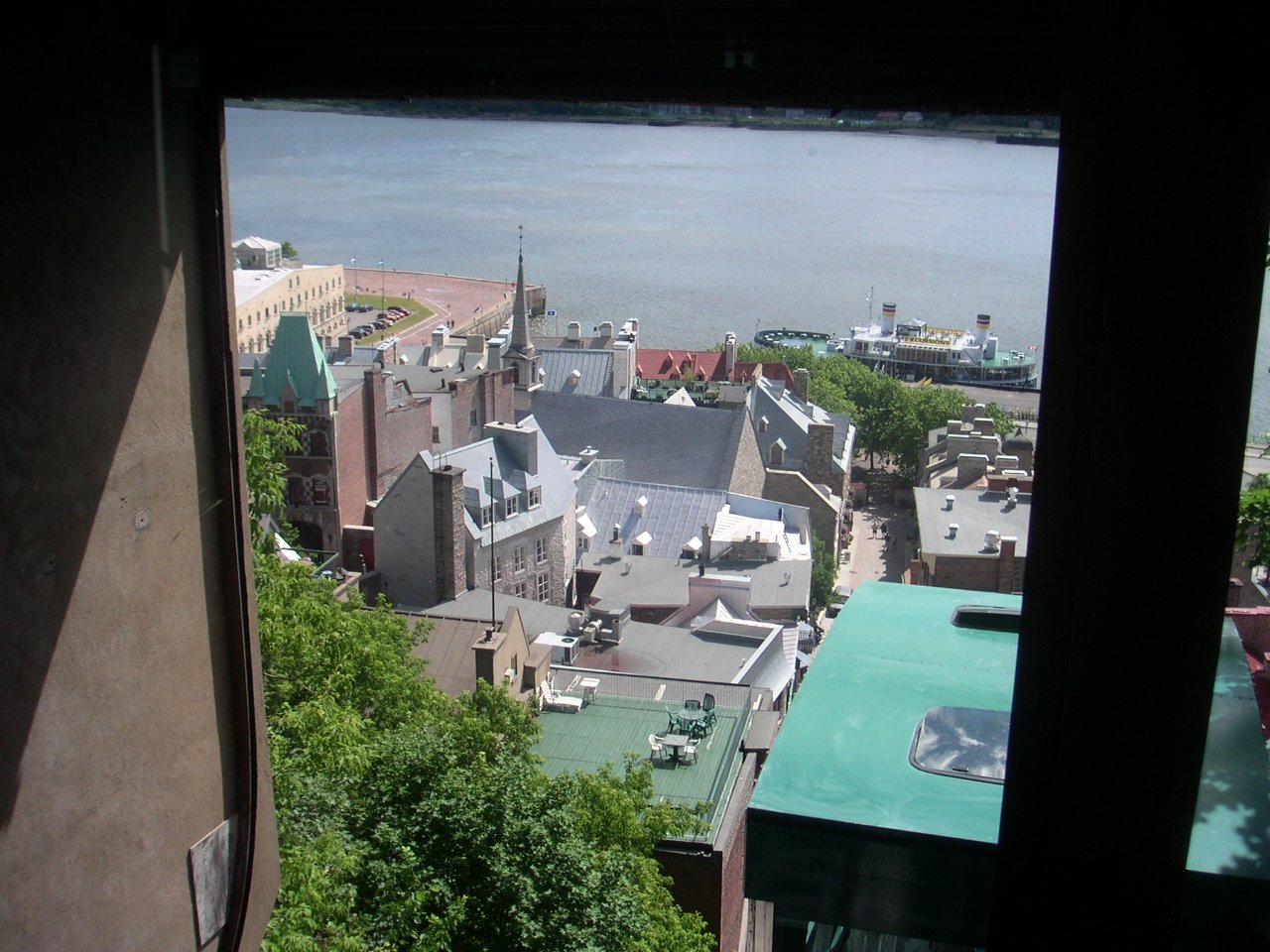
Photo: Lower Town viewed from the Québec City funicular, July 2005, by Friejose / Wikimedia Commons, CC BY-SA 3.0. Historical photograph used without alteration.
Choose a base for Québec City without a car
Begin with the places you want to visit most, then compare the route from each possible hotel. A property described as central may still leave a hill, stairs or a long final walk between you and your plans. Look at the actual entrance address rather than only the neighbourhood name.
For a short stay focused on Old Québec, compare accommodation within or near the historic centre first. If you prefer another neighbourhood, check both the daytime journey and the return after dinner. The official tourism guide to reaching Old Québec recommends choosing a base around the transport options that work for you.
Before booking, ask the property about the approach with luggage, entrance steps and nearby transit. Our Québec City neighbourhood comparison helps you decide which setting fits the trip. A convenient base can matter more than saving a little on a room that requires extra transfers every day.
Plan the arrival with luggage separately
Treat arrival as its own journey. Enter the precise airport or station and your accommodation address into the transport planner for your intended arrival time. Then check the final walking section, especially if you will have suitcases, a pushchair or limited mobility.
Québec City’s tourism office describes RTC bus connections serving the airport and train stations. That does not mean every hotel has a direct bus. Compare the whole route, including transfers, waiting and the approach from the stop. Avoid choosing a service solely because its destination name sounds close to your hotel.
For a late arrival or a group carrying several bags, compare a taxi or another available transfer with transit. Check the operator’s current pickup instructions and price before committing. This guide does not quote an airport fare or promise a fixed transfer time; the right option depends on your address, arrival and group.
Group Old Québec walks by area
Explore one area at a time instead of repeatedly moving between Upper Town and Lower Town. Start near your accommodation, choose a main sightseeing block, and put lunch close to where that block ends. After a break, decide whether to continue or take transport back.
For example, you might focus one outing on the streets around Place Royale and Petit-Champlain, then give an Upper Town outing its own part of the day. This is a planning suggestion rather than a prescribed walking route. Check the approach and accessibility of each attraction you choose.
Short distances on a map do not describe the effort of slopes, steps or winter surfaces. Plan a return that your group can manage after sightseeing, not just when everyone is fresh. If you want to use the funicular between the two areas, check its operator’s current hours, fare and accessibility before relying on it. The historic featured photograph illustrates the setting, not current operating conditions.
Use our two-day Québec City itinerary for sightseeing ideas, then adjust each outing around your own starting point and pace.
Use RTC for the journeys that save effort
Open RTC’s official itinerary page and enter exact addresses. Review the departure time, bus direction, transfer point and walking sections. Also plan the return before leaving: a workable outward journey does not establish that the same connection suits your evening.
RTC notes that walking times are approximate and bus arrival times can vary with conditions. Leave room for those differences instead of scheduling an attraction immediately after a tight transfer. Check the stop location again if your map and signs disagree.
As checked on October 23, 2026, RTC has a notice about unstable real-time information. Read the current notice and use published schedules and service alerts alongside live estimates. This is particularly useful when choosing how early to leave for a booking or departure.
Compare fares for your actual plans
Consult RTC’s current fare schedule before buying. Compare the number of rides you expect with the pass options and their validity periods. Check age categories, payment method and transfer rules rather than assuming every ticket works the same way.
A pass is useful only if its conditions fit the trip. List the journeys you actually need, including arrival and departure if applicable, then compare the total. If you expect to walk most of the time, do not buy a longer pass simply because your stay lasts several days.
Check how to obtain and validate your chosen fare before you reach the stop. Keep a backup plan if your phone battery or mobile connection fails. This article leaves prices to the operator’s live schedule so you can select the right fare for your travel date and circumstances.
Keep a regional excursion separate from city transport
A car-free city break does not automatically make every regional attraction easy to reach. Before adding an excursion outside the centre, verify the outward journey, last practical return and the exact place where you will be dropped off.
Compare a suitable bus, an organized excursion or a vehicle rental for that specific day. Check the provider’s current operating season and booking terms. Avoid assuming that a seasonal shuttle runs year-round or that a city transit pass covers every service in the region.
If the connection leaves too little time at the attraction, keep the day in the city instead. For more ideas, browse our Québec City guides. A relaxed visit can be better than spending most of the day managing a difficult return connection.
Québec City without a car: final checklist
- Before booking: compare the hotel entrance, slopes, steps and nearby transport.
- Before arrival: save the full luggage-friendly route and a backup transfer.
- Before an outing: group nearby stops and check the return journey.
- Before boarding: confirm direction, stop notices and your fare’s conditions.
- Before an excursion: verify service dates and the last practical return.
Bring footwear suited to the forecast, a charged phone and only the bag you are comfortable carrying. In wet or wintry conditions, shorten walks and allow extra time. Match the plan to your group rather than treating a map’s walking estimate as a target.
Québec City without a car FAQ
Do I need a car to visit Old Québec?
A stay centred on Old Québec can be planned around walking and appropriate transit or transfers. Choose a base and routes that fit your mobility, luggage and weather. Regional outings need their own transport checks.
Can I take public transport from the airport or train station?
RTC serves airport and railway connections, as described by the official tourism office. Check your exact arrival point, hotel address, travel time and final walk; not every accommodation has a direct bus.
Is Québec City easy to walk around with luggage?
Do not assume so from distance alone. Check slopes, steps and the actual hotel entrance. Compare a transfer for the arrival journey if a bus leaves a final walk that does not suit your group.
Should I buy a transit pass for the whole stay?
Count the rides you expect, then compare RTC’s current fares and validity periods. A longer pass is not automatically better if most of your sightseeing will be on foot.